While the world fixates on harmless cosmic passersby, a genuine extinction-level threat orbits in plain sight, ignored. Comet Swift-Tuttle, a 26-kilometer-wide mountain of ice and rock, remains the single most dangerous object known to humanity. Its eventual return poses a mathematically verifiable risk of a civilization-ending collision, an event that would dwarf the asteroid that erased the dinosaurs.

The current astronomical discourse is dominated by distractions. The interstellar visitor 3I/ATLAS, while scientifically invaluable, poses zero threat as it speeds away on a hyperbolic trajectory. The asteroid Apophis, despite its dramatic close approach in 2029, has been definitively ruled out as an impact risk for centuries. Public anxiety is misallocated, fueled by sensationalism and a fundamental misperception of cosmic risk.
Meanwhile, Swift-Tuttle’s credentials for catastrophe are unparalleled. Discovered in 1862, this periodic comet follows a 133-year orbit that crosses Earth’s orbital path. Its sheer size is staggering—at 16 miles across, it is larger than the city of Paris. More critically, it moves on a retrograde orbit, meaning it circles the Sun in the opposite direction to Earth.
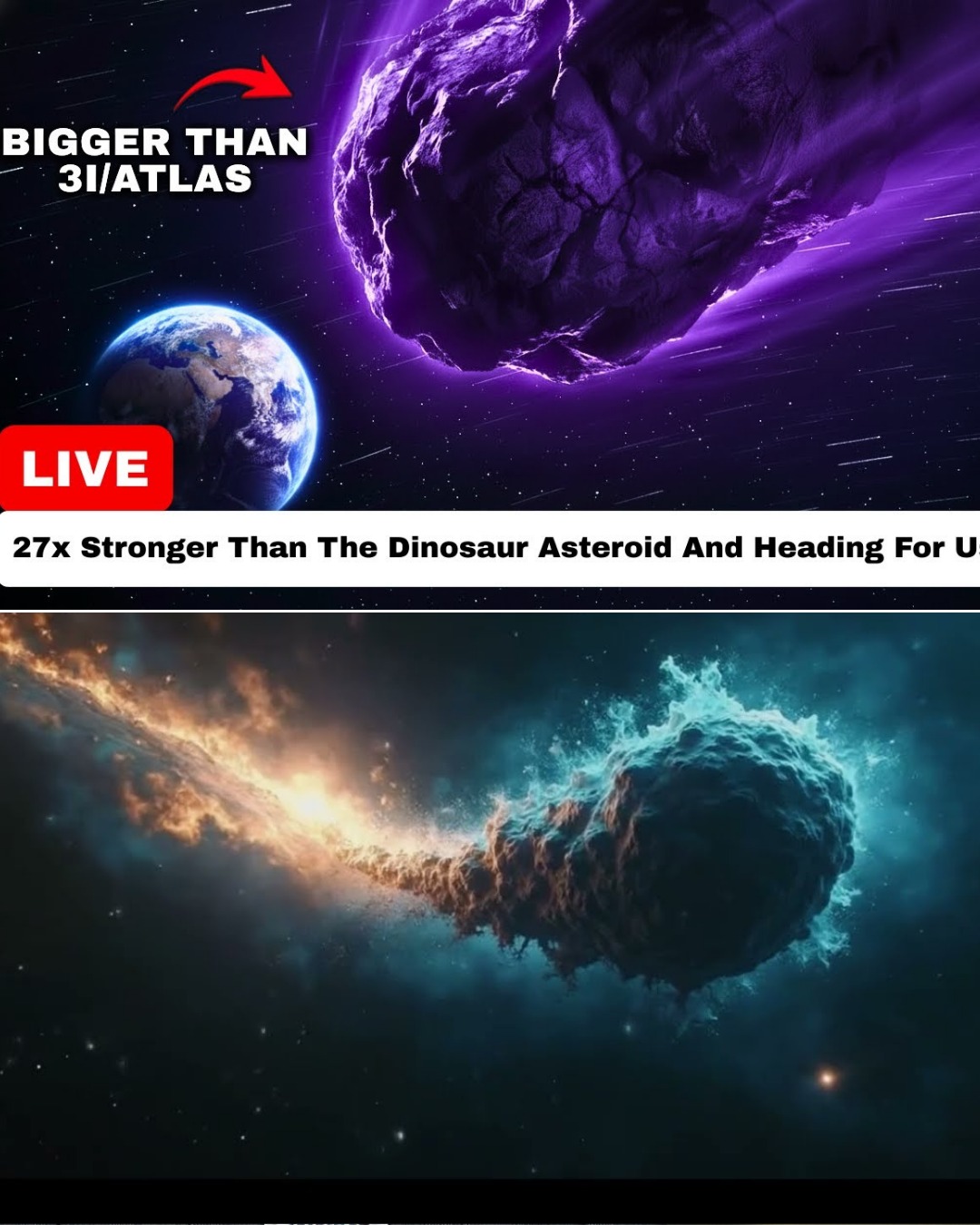
This orbital geometry sets the stage for an impact of unimaginable violence. A head-on collision would occur at a relative velocity exceeding 200,000 miles per hour. The kinetic energy released would be approximately 27 times greater than the Chicxulub impact that ended the Cretaceous period. The event would not be a local disaster but a global extinction.

The immediate effects would be apocalyptic. The impact would vaporize thousands of cubic miles of the Earth’s crust, ejecting molten debris that would rain fire across continents. If it struck an ocean, tsunamis kilometers high would scour coastlines worldwide. The real devastation, however, would unfold in the following months.
A thick blanket of dust and aerosols would encircle the planet, blocking sunlight for years. Photosynthesis would collapse, triggering a rapid chain of ecosystem failure. Global temperatures would plummet in a prolonged impact winter, followed by acid rain from atmospheric chemistry changes. The event would reset the trajectory of life on Earth.
The comet’s next close approach is calculated for August 2126, with a safe pass expected. The profound danger lies in the far future. Gravitational perturbations, primarily from Jupiter, can gradually alter its orbit over centuries. Long-term orbital projections show potential resonant pathways that could, in millennia to come, bring Swift-Tuttle and Earth to the same point in space and time.

This is not speculation; it is orbital mechanics. We cross the comet’s debris stream every August, creating the beautiful and harmless Perseid meteor shower. This annual event is a constant reminder of the intersecting paths we share with the parent body. The dust grains are benign, but the nucleus is a stored cataclysm.
The cognitive disconnect is stark. The public and media landscape buzzes with conspiracy theories about silent government cover-ups of 3I/ATLAS, while a known, cataloged, and actively monitored existential threat receives scant attention. The human mind struggles to engage with threats on geological timescales, prioritizing the novel and immediate over the distant but definitive.

Our planetary defense capabilities further highlight this disparity. The successful DART mission proved we can nudge a small asteroid. Deflecting an object of Swift-Tuttle’s mass and velocity, however, is a challenge orders of magnitude beyond current technology. It would require decades, if not centuries, of advance warning and coordinated global effort.
The imperative is clear: we must recalibrate our vigilance. Investments in next-generation survey telescopes like the Vera C. Rubin Observatory are crucial for discovering unknown threats. However, equal priority must be given to refining long-term modeling of known hazardous objects like Swift-Tuttle and developing deflection technologies for mega-threats.
The cosmos is indifferent. It operates on physics, not narrative. The fascination with interstellar visitors and close-approaching asteroids is understandable, but it is a dangerous distraction if it blinds us to the slower-moving, yet infinitely more powerful, danger we have already identified. Our survival as a civilization may one day depend on recognizing the difference between a fascinating sideshow and the main event.
Swift-Tuttle is not a mystery. It is a monument. A monument to the violent processes that shaped our solar system and a testament to the fragility of our existence within it. Forgetting its name, or dismissing its potential, is a luxury our descendants cannot afford. The real planet killer isn’t the one trending on social media; it’s the one silently tracing its path through the dark, waiting for its next appointment with history.