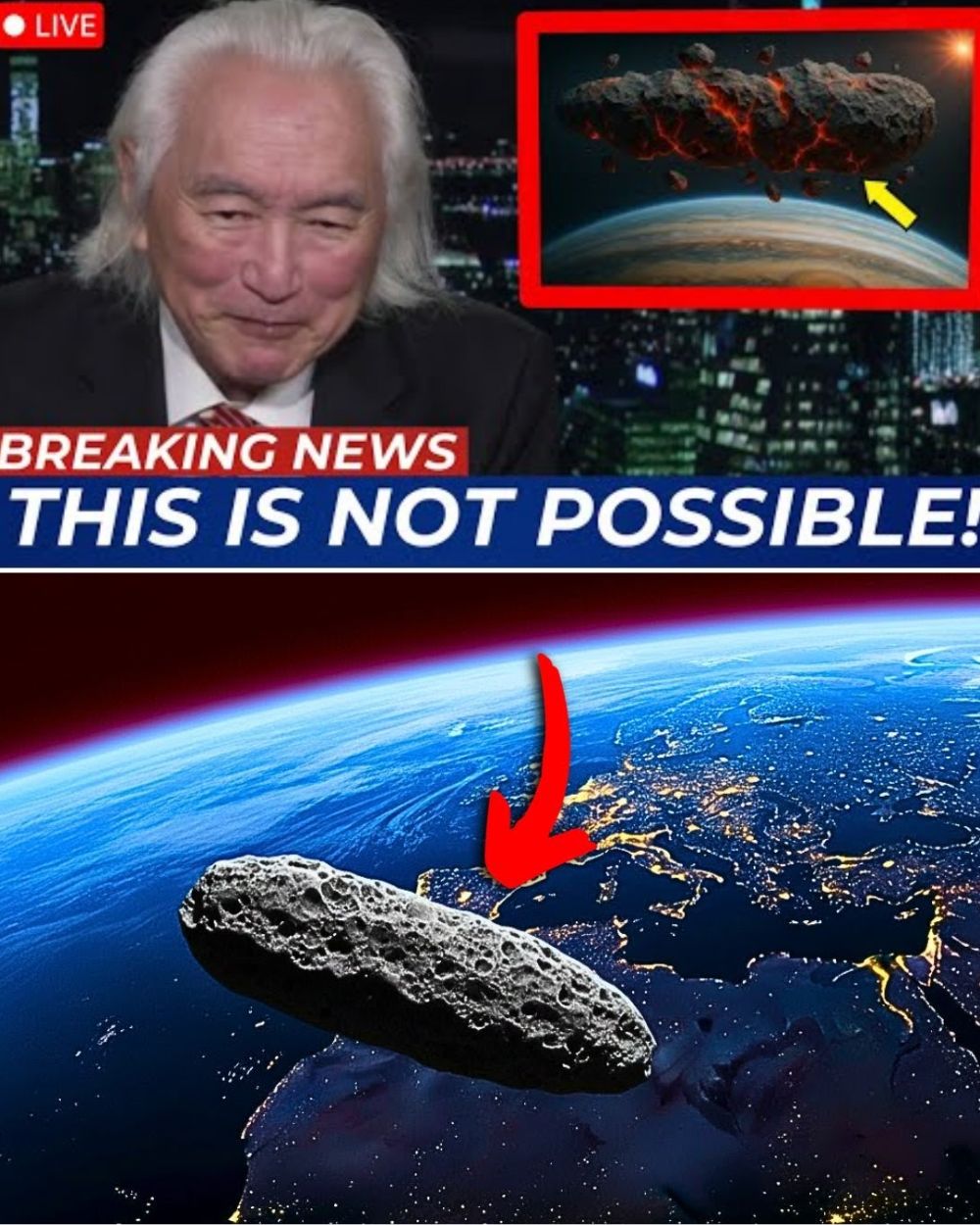
Headlines are exploding with claims that physicist Michio Kaku has “broken his silence” about a mysterious object known as 3I/ATLAS, allegedly warning of hidden forces, non-natural control, and a universe that is “watching.” But experts urge caution: there is no verified evidence that 3I/ATLAS is artificial, controlled, or behaving in ways that violate known physics.
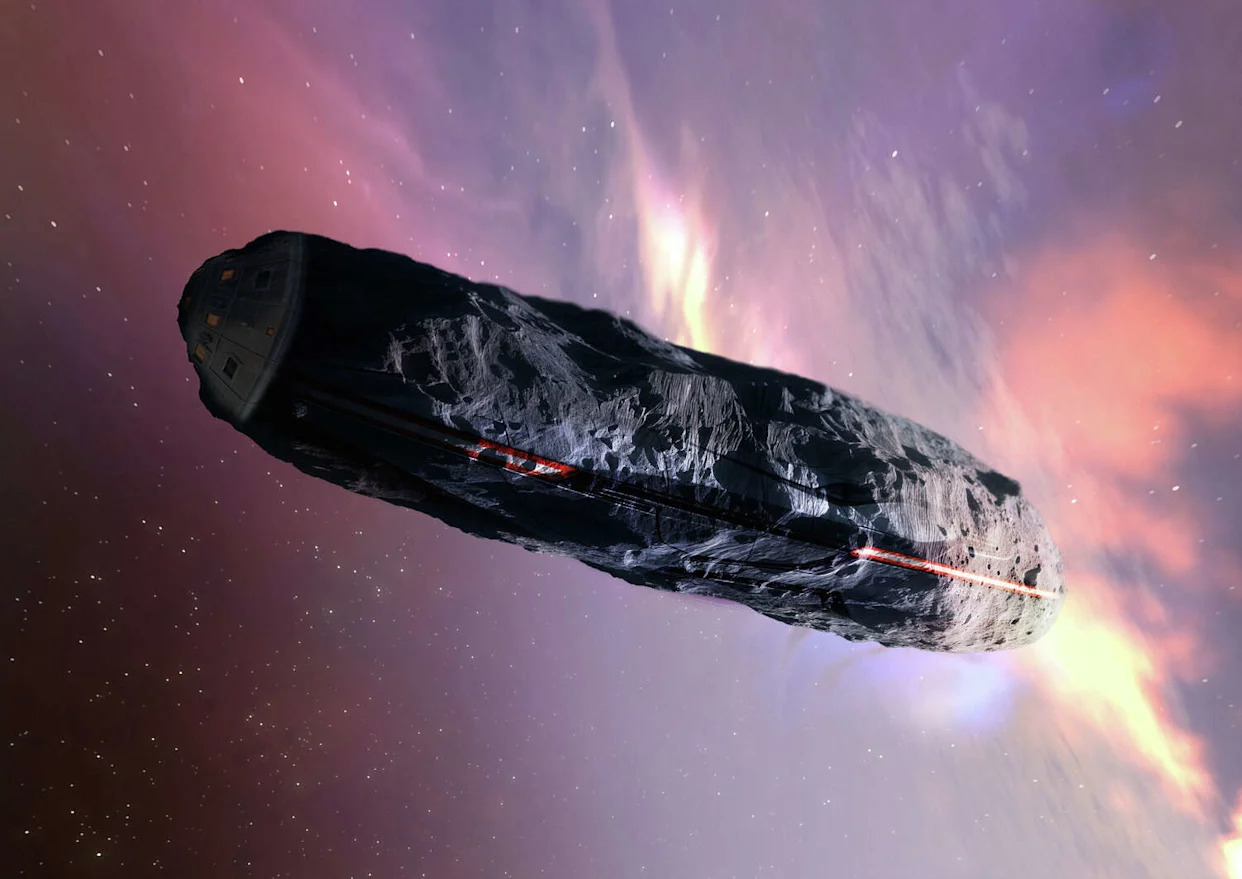
What’s actually happening is far less dramatic—and far more familiar to scientists. Objects tracked by sky surveys like ATLAS can appear to change speed or direction due to measurement uncertainty, perspective effects, gravitational interactions, or incomplete orbital data early in observation. As more data is collected, trajectories are routinely refined, and apparent “impossible shifts” often resolve into ordinary celestial mechanics.
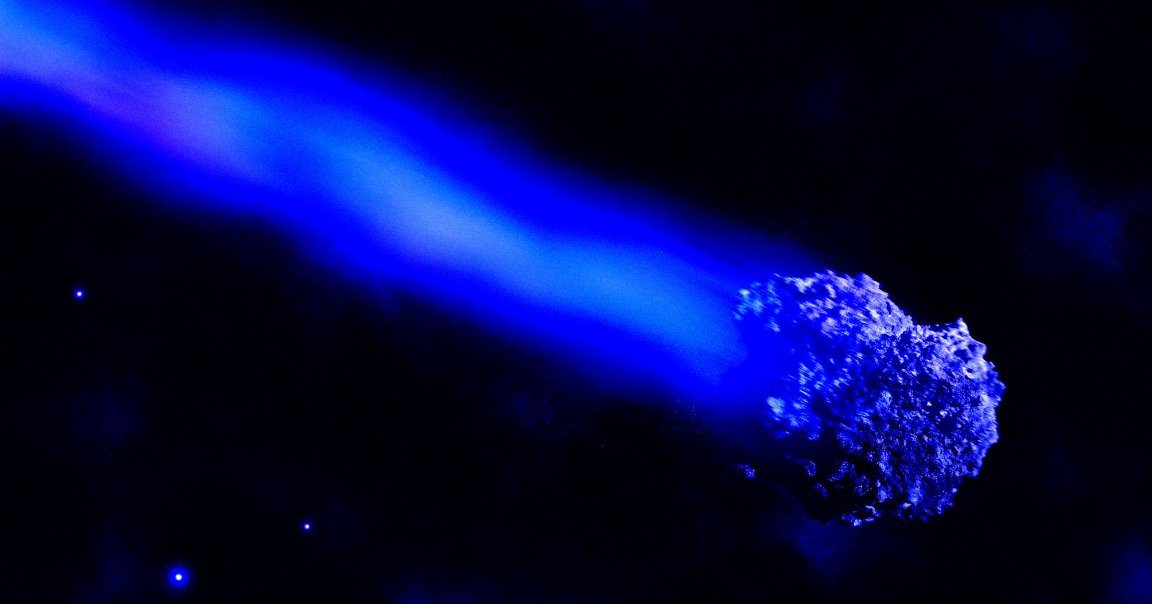
Dr. Kaku, when discussing cosmic mysteries in public forums, typically speaks in theoretical and philosophical terms, exploring possibilities—not confirming events. There has been no authenticated statement from him claiming non-natural control of any observed object, nor warnings of a conscious or purposeful universe. Scientists emphasize that speculation is not evidence, and extraordinary claims require independent confirmation from multiple observatories worldwide.
Astrophysicists also warn that dramatic language—“dark patterns,” “hidden forces,” “it’s watching”—can amplify fear without facts. Space agencies continuously monitor near-Earth objects, and no alerts indicate an artificial craft or anomalous threat. Unusual data points are investigated methodically, not sensationally.
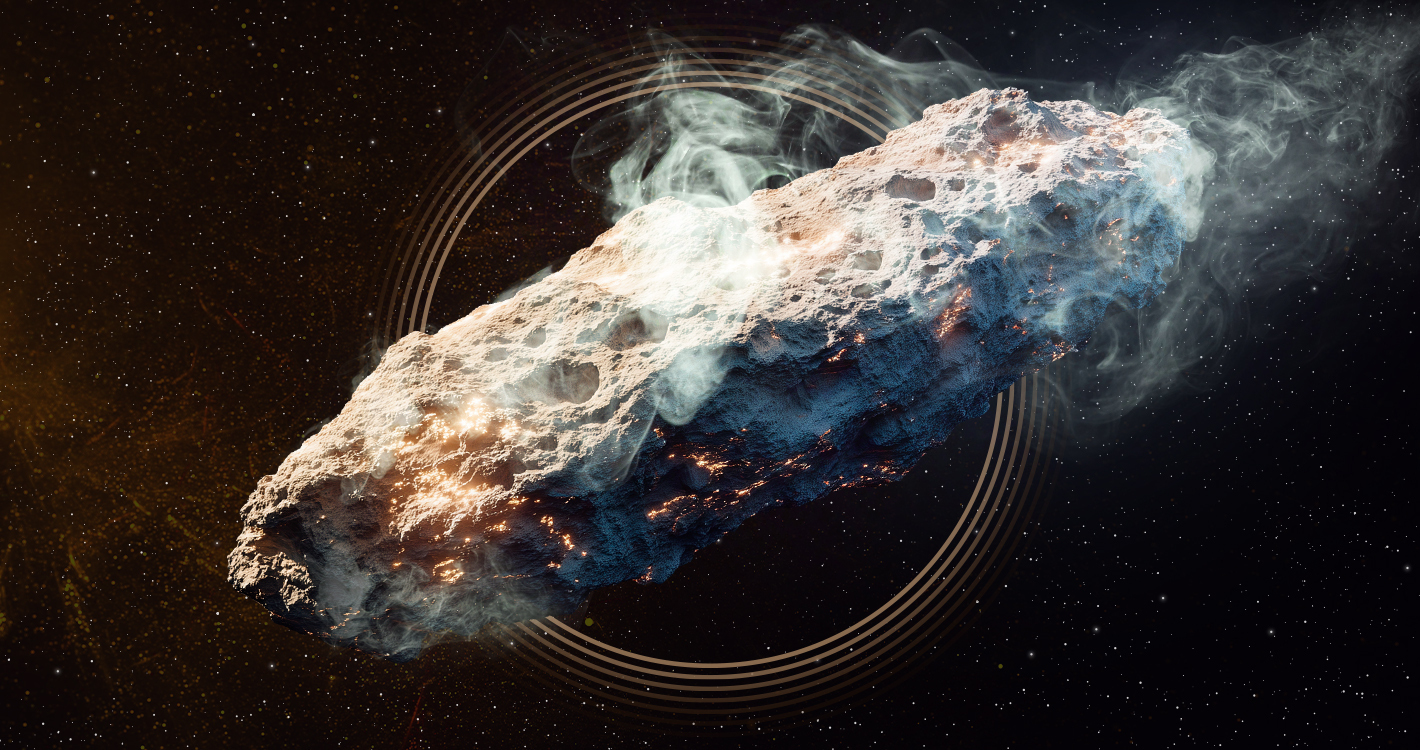
The universe isn’t becoming “less passive.” It’s being observed more precisely than ever. As instruments improve, anomalies appear more often—but most vanish under scrutiny. Until peer-reviewed data says otherwise, 3I/ATLAS remains what scientists believe it is: a natural object, imperfectly measured, steadily understood.