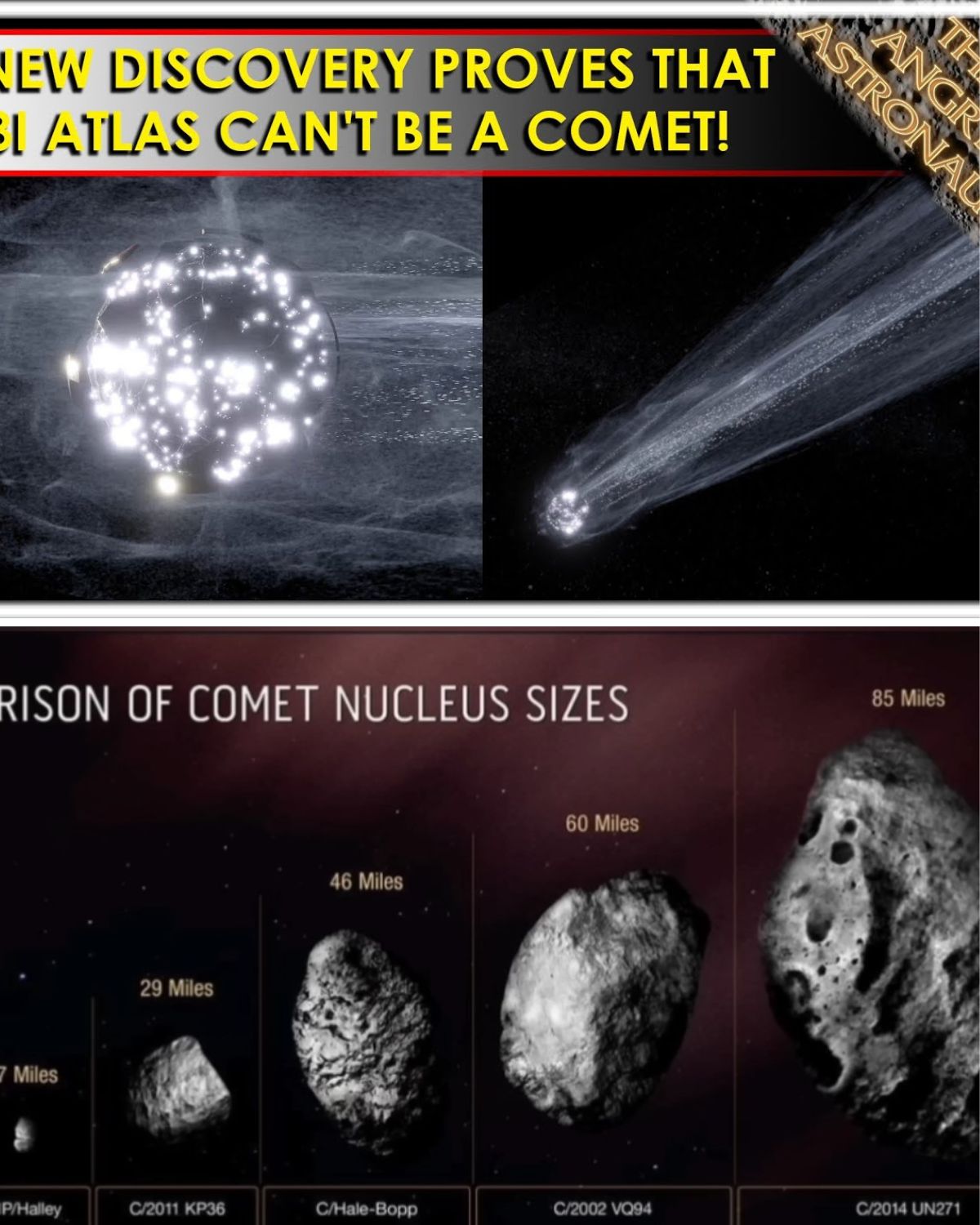
In a shocking new development that has sent ripples through the astronomical community, researchers have presented compelling evidence suggesting that the mysterious celestial object known as 3I/Atlas—initially classified as a comet—may in fact be a fundamentally unique and unprecedented entity. With luminous jets blasting in seemingly impossible configurations and a trajectory that defies statistical odds, the revelations raise profound questions about our understanding of interstellar objects and their implications for extraterrestrial life.

Avi Loeb, an acclaimed astrophysicist and author, dropped the bombshell in a recent article that examined the myriad anomalies associated with 3I/Atlas. These anomalies, which Loeb has meticulously cataloged, suggest that the object does not conform to the standard behaviors expected of comets. In his latest updates, released just hours ago, Loeb unveiled even further extraordinary details that could redefine everything we know about bodies venturing through our solar system.
From its unusual retrograde trajectory, which aligns almost perfectly with the solar system’s ecliptic plane, to the precise timing of its approach—allowing it to scrape perilously close to planets that may harbor life—3I/Atlas presents characteristics that appear to be almost too precise to dismiss as happenstance. The mathematical likelihood of such coincidental events occurring is staggeringly low, at less than 0.0005%. Could it be that 3I/Atlas is not merely a wanderer from the depths of space, but rather something far more complex, perhaps even engineered?
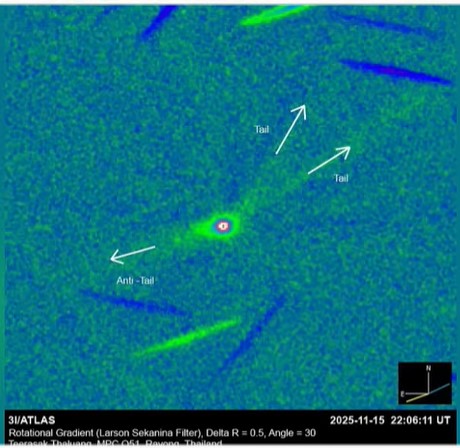
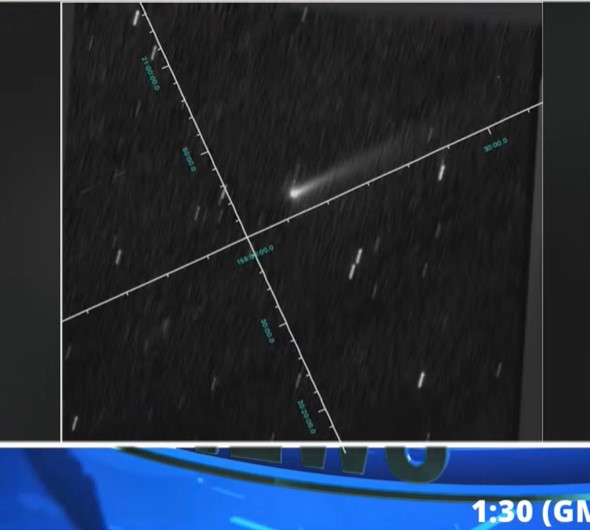
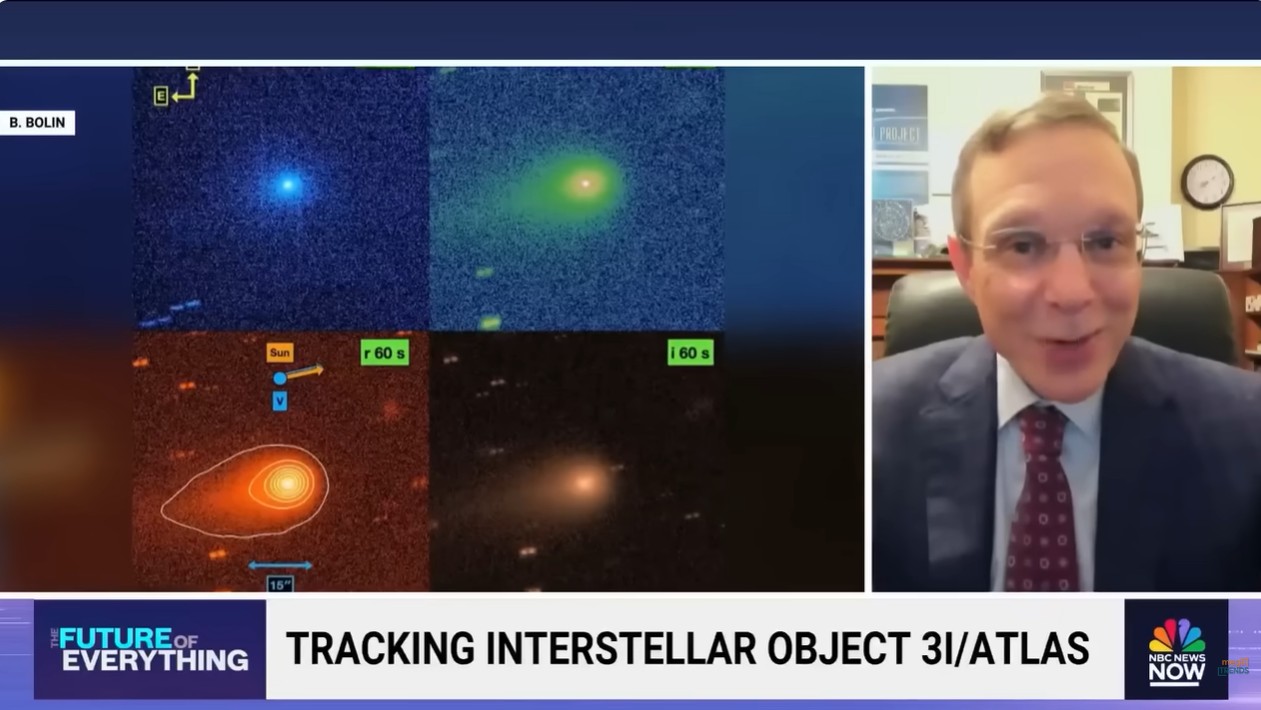
One of the most riveting anomalies—number twelve on Loeb’s list—centers on the object’s jets, which emerge in distinct formations that contradict the natural dispersion expected from a rapidly rotating body. Observations made by astronomers F. Nebling and M. Bcnner reveal these jets, extending over a million kilometers, should have been affected by the object’s rotation. However, they maintain strikingly coherent paths, almost suggesting a precise mechanism is at play akin to technological thrusters. The potential implications of these findings are staggering: if 3I/Atlas has demonstrated the ability to execute such controlled outflows, how should we interpret its presence within our solar system?
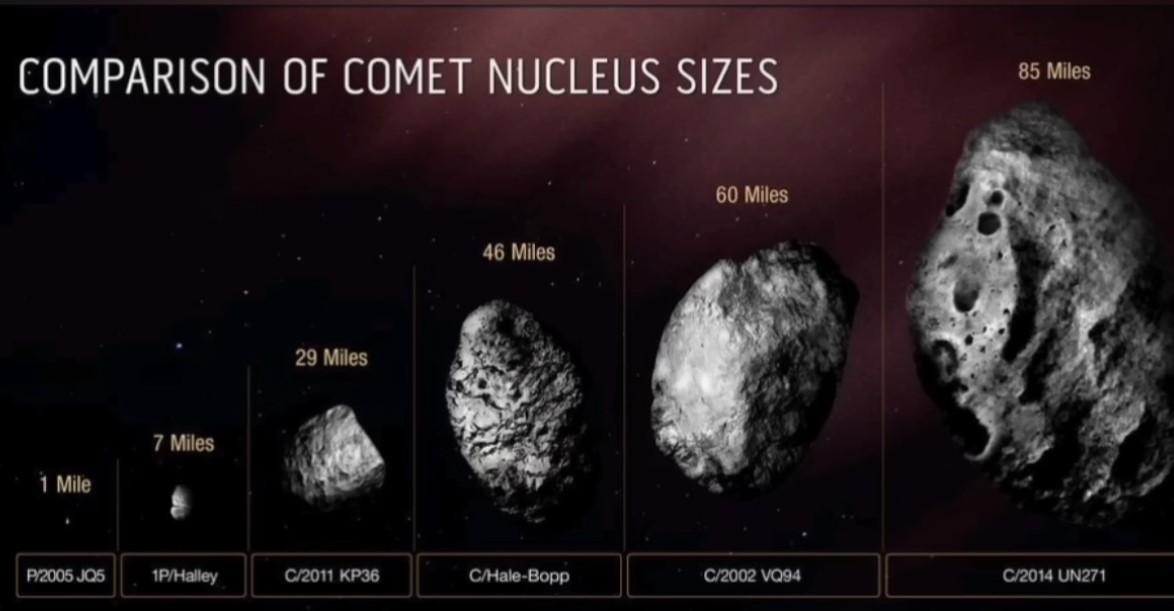
As the scientific community rushes to dissect these revelations, debates erupt louder than ever, as the arguments laid forth by Jason Wright, a SETI researcher who has been vocally critical of Loeb’s assessment, gain traction. Wright posits that 3I/Atlas can be likened to natural comets, citing one in particular—C/204 UN271—whose behavior he claims displays similarities to the anomalous jets observed with 3I/Atlas. But this assertion has been met with fierce rebuttals, emphasizing that the solar wind conditions experienced by UN271, far from the sun, fail to provide a suitable comparison to the immense solar pressure affecting 3I/Atlas.
The dramatic confrontation illustrates the urgency of the situation: as scientists dissect these discoveries and debate the origins and nature of 3I/Atlas, there is an overwhelming push for further investigation into what could be one of the greatest cosmic revelations of our time. Detractors like Wright may cling to traditional narratives, but the mountains of evidence supporting Loeb’s claims are compelling and compellingly urgent.
3I/Atlas’s brightening behavior near perihelion, its extreme negative polarization, and its intriguing gas composition—which is suspiciously rich in nickel—pose questions humanity has never been required to ask before. If these jets are indeed thrusters, who or what is orchestrating their harnessing of energy in such a controlled manner? Are we witnessing the remnants of an alien civilization, or perhaps an advanced probe sent to observe our planet?
As astronomers work fervently to establish the true nature of 3I/Atlas, both the scientific community and the wider public stand at the brink of what could be a watershed moment in the history of humanity’s exploration of the cosmos. The stakes could not be higher. Ignoring the anomalies presented by 3I/Atlas might lead us to gloss over warnings of forces or intelligences beyond our understanding that occasionally cross our path.
Certainly, the debate surrounding 3I/Atlas deserves immediate and serious attention—not only from astrophysicists but from global leaders and policymakers who must prepare for the implications of humanity’s potential new understanding of the universe. Its journey through our solar system may not just be a scientific inquiry, but a forecast of a future wherein humanity must confront its own place in the universe amidst cosmic neighbors, be they friendly or otherwise.
In a climate where information travels faster than light, looms this question: are we ready to confront this pivotal chapter in astronomical history, and how will we harness our knowledge moving forward? The scientific community may be polarized, but one thing is certain—3I/Atlas is no ordinary comet, and this extraterrestrial conundrum calls for our utmost attention and unwavering urgency. The world is watching. Will we rise to the occasion?