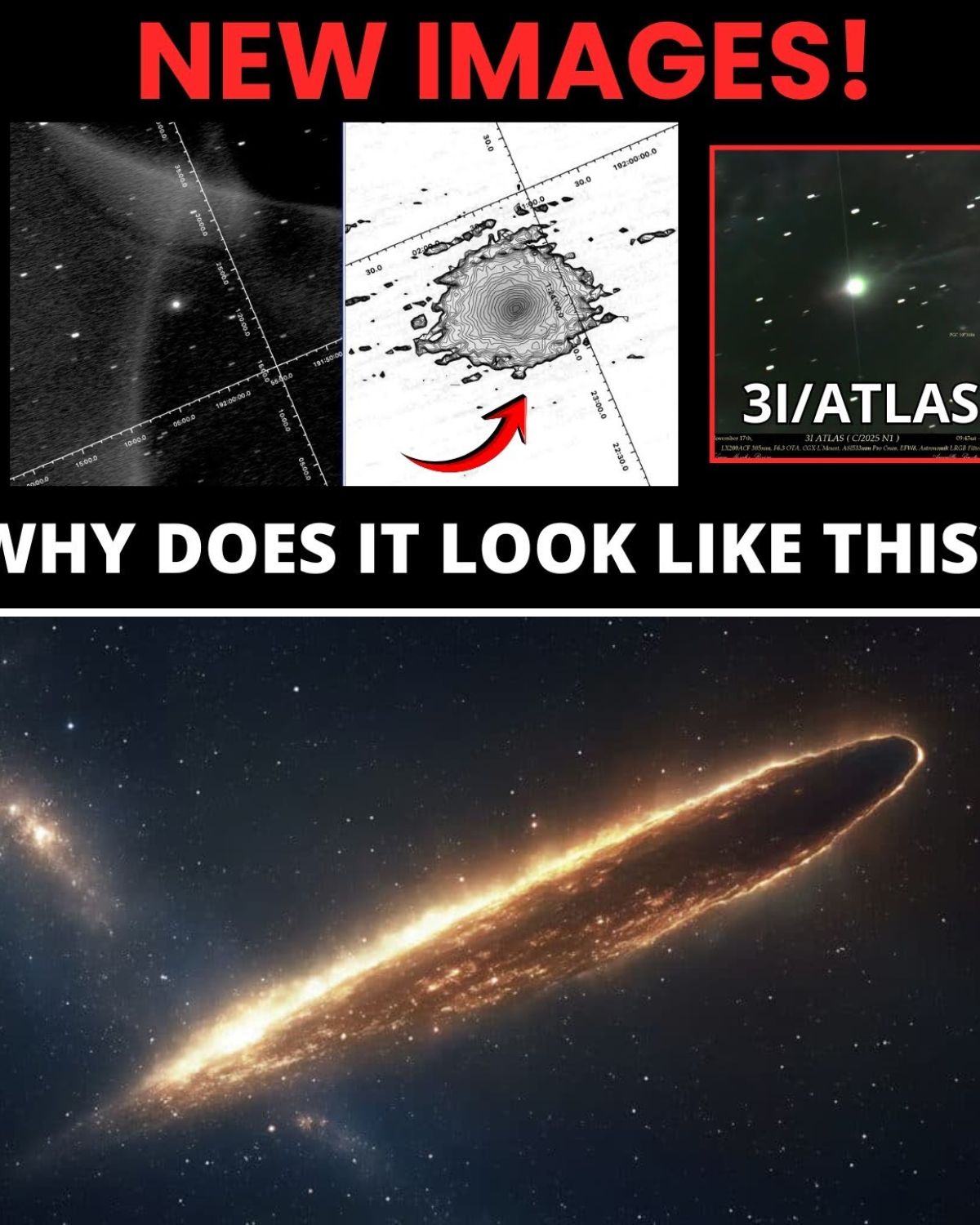
Breaking news reverberates across the scientific community as new data regarding Comet 3I/Atlas has taken the narrative and flipped it on its head. After weeks of speculation and dire predictions concerning the comet’s structural integrity following perihelion, researchers have unveiled findings that challenge previous assumptions and suggest something altogether unexpected: 3I/Atlas remains intact, acting as a single, cohesive entity, though still exhibiting some of the most bizarre behavior ever observed from such celestial bodies.

For weeks, the airwaves buzzed with excitement and dread as astronomers and amateur stargazers alike pointed fingers at 3I/Atlas. Claims that the comet had fractured into multiple pieces surged after a series of irregularities were detected in its jets and dust environment. Yet, as recent revelations from Neoat have shown, those concerns may have been unfounded.
The star of today’s scientific spectacle is an astonishing new contour map derived from the latest data, revealing a level of detail unprecedented in previous observations. Scientists have utilized this data to construct a meticulously crafted 40-level contour plot that images not height, but brightness, accurately mapping light intensity in relation to the comet’s nucleus. The results are staggering: a perfectly tight, concentric, and circular contour that signifies what one would expect from an undivided solid nucleus.
If 3I/Atlas had indeed splintered into debris, the implications would be glaringly evident. Observers would expect to see a distorted core, irregular brightness peaks, and an overall wobbliness that suggest structural disarray—none of which is visible in this contour data. Scientists are unequivocal. The core maintains its stability and symmetry, presenting the strongest evidence to date that 3I/Atlas remains one robust entity, defying the catastrophic narrative that had gripped the astronomical community.
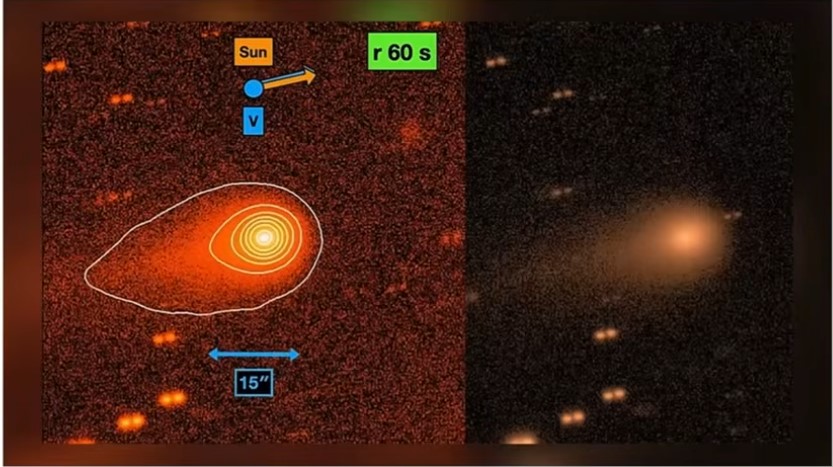
Amidst this revelation, a fresh amateur image from Puerto Rico adds yet another layer to the narrative, suggesting tantalizing details about the comet’s behavior. While the quality of the image may not be scientifically pristine, it depicts a faint curling in the comet’s tail—an effect that observers associate with the undocumented rotation of the nucleus. When a celestial body rotates, it releases material not in a linear fashion, but in curving patterns induced by the forces acting upon it, particularly solar radiation pressure. Such details, if validated, would illuminate new aspects of how 3I/Atlas interacts with its cosmic environment.
Although skeptics may urge caution regarding the image’s methodological integrity, any unease quickly dissipates upon review of the larger picture—the nucleus appears to be a single solid body, throwing off material at rates that correspond with its known activity. This fresh visual evidence stands counter to previous assertions that the comet displayed signs of fragmentation, urging a critical re-evaluation of earlier interpretations. The insistence that the core remains intact serves as a remarkable vindication for the critics of the fractures narrative.
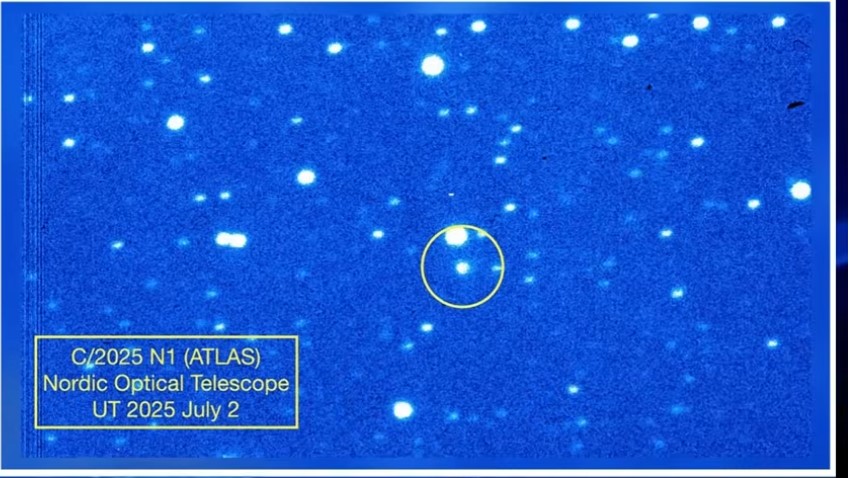
And for those who remember last week’s tumultuous theories surrounding strange dust behavior and asymmetric jets, this new data effectively dismantles the urgency of those arguments. Just because the dust may behave oddly doesn’t imply that the very essence of the comet has fractured. Drew Doss’s announcement reaffirming the NEO SAT team’s latest findings emphasizes a crucial statement: the data’s quality is improving, the view keeps sharpening, and crucially, there remains no evidence to support the narrative of a comet coming apart at the seams.
Now, excitement reaches a fever pitch as NASA is preparing to release high-resolution images in the coming days. With the high-rise images known for their unparalleled resolution, scientists await with bated breath to see if subtle fissures could signal underlying issues within the nucleus. If the findings match the compelling data gathered thus far, we could witness a groundbreaking moment in the study of interstellar objects.

As historians reflect on this astronomical saga, one can only imagine the significance it could have. For now, 3I/Atlas stands tall, or rather intact, in the annals of cosmic exploration, continuously captivating the scientific community and igniting further curiosity among space enthusiasts everywhere. The comet is not fracturing; it continues to race through the solar system with an enigmatic collection of behaviors that challenge everything we’ve understood about such bodies.
Stay tuned—this evolving story is set to revolutionize our understanding of comets, and fresh updates are on the horizon. With every new image released, the tone shifts dramatically, igniting discourse across scientific platforms and keeping our eyes trained on the skies. The narrative is changing, and we are here to witness it.